AI-first solutions for the manufacturing industry

AI solutions that plug margin leaks, free up working capital and reduce spend.

Tailored to your business model, so you can take the best decisions on margin and cashflow.

Decision intelligence for leaders in the manufacturing industry, built on your business model and your strategy. It concentrates on the three to five decisions on price, volume, mix, cost and working capital that carry the EBIT.

Working Capital Cash
Spend Analytics Cost
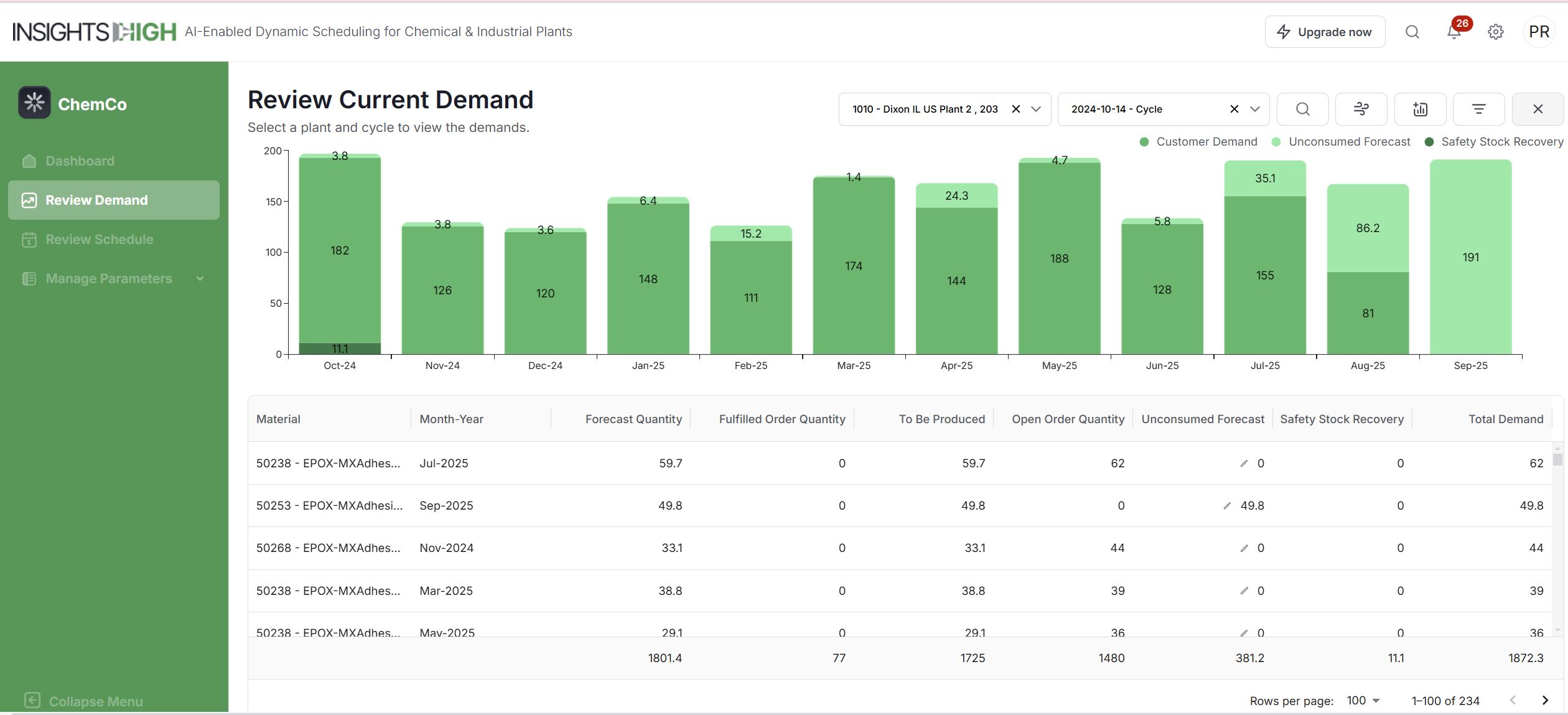
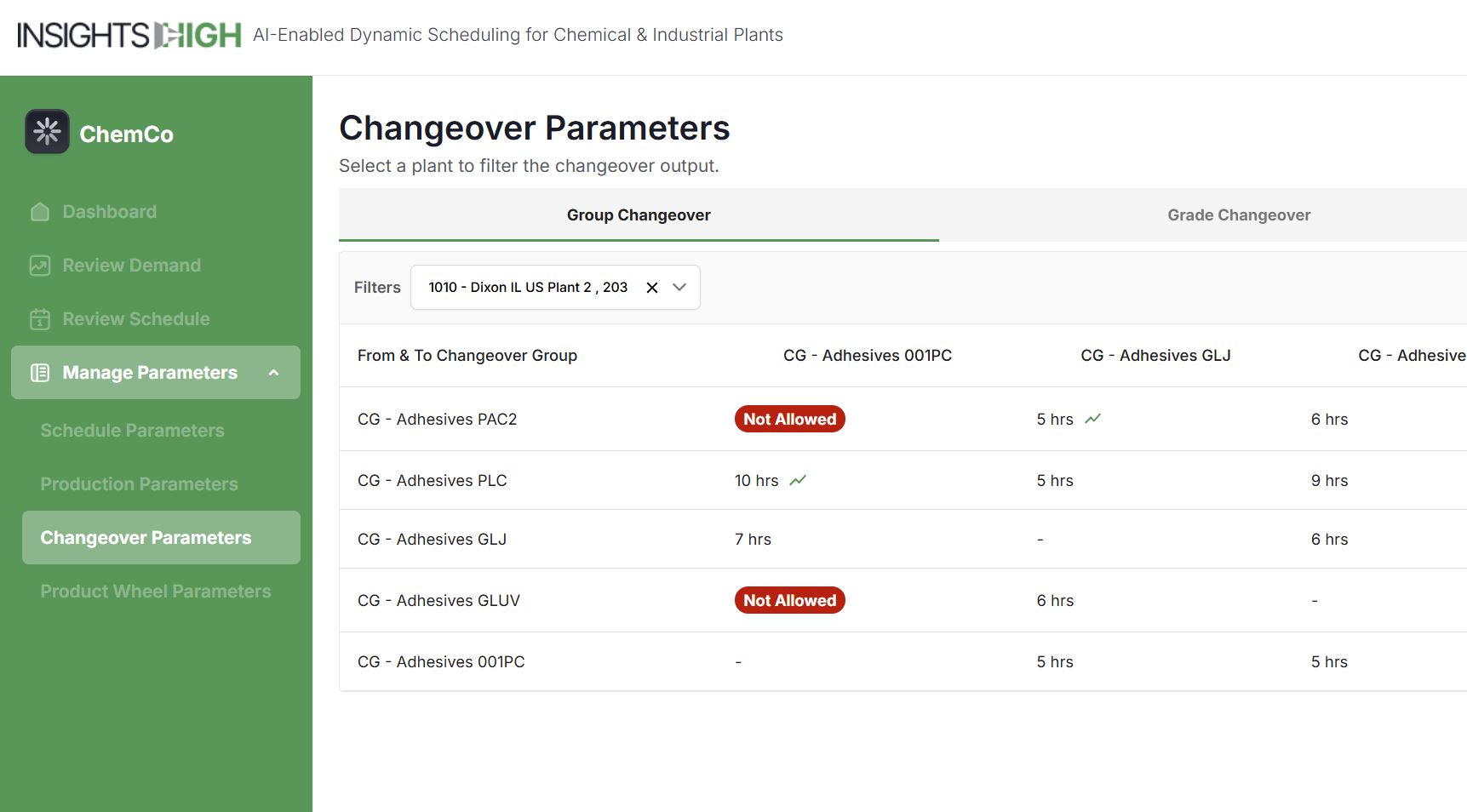
Plant Scheduling Revenue · Cost
Commercial Excellence Revenue
Cost Optimization Cost

Our stack for solutions

1 Data
Legacy systems ERP CRM SC planning
2 Context and Knowledge Graph
Tribal knowledge Unstructured data Semantics Context
3 Algorithms
Optimization Machine learning Generative AI
4 Decision Intelligence
Insights Workflow Action capture

The middle layers hold your hierarchies and your definitions. Everything above inherits them.

Track record

20+ years of transformation work inside the manufacturing industry, across more than 70 transformation initiatives.

20–30%
working capital released
200–700
bps improvement in contribution margin
9 yrs
deploying analytics inside enterprises
Why now

The Golden Era for Manufacturers

Functional silos persist because they are rational. Each group optimizes the metric it is held to, and does it competently. Alignment across them has always been the binding constraint, and it has historically heavily depended on leadership rather than on any system.

That constraint is lifting. Optimization was never the gap; the algorithms have existed for decades. What is new is agentic AI: a decision can now be weighed against every function’s consequence at the moment it is made.

Read our story

Procurement is measured on landed cost. Manufacturing on cost per unit. Sales on never missing an order. Every function is doing its job well, and the three goals pull against each other.

London, 2013 · Dinner with Keith Oliver, who named supply chain management

Runes AI Platform · The Core Suite

Start with the decision that is costing you the most.

Each one is deployable on its own, and each one is built on your business model rather than a generic template. Together they concentrate on the three to five decisions on price, volume, mix, cost and working capital that carry the EBIT.

Inventory
Working Capital
Moves Cash

Visibility into where inventory sits and where it is over or understocked, with the causes traced, and S&OP policies and targets calibrated so every function is aligned on the same numbers.

Inventory visibility Over / understocking causes MTO vs MTS segmentation Stocking targets & replenishment Lead times & MOQs
Procurement
Spend Analytics
Moves Cost

Spend always reconciled to what the CFO sees in the GL, leakage against contracted price found at the invoice line, and a recommendation on what price to pay and how to negotiate it.

Reconciled to the GL Maverick spend Leakage vs contract price Contract centre Should-cost & index simulation
Planning
Plant Scheduling
Moves Revenue · Cost

Multi-asset, multi-stage sequencing solved together rather than one stage at a time, traded off against contribution margin, and re-solved when downtime, quality holds or urgent orders change the day.

Sequence optimization Margin-aware tradeoffs Real-time re-scheduling Planner co-pilot Yield & quality risk
Cost to serve
Cost Optimization
Moves Cost

Cost reduction levers on who you buy from and what you buy: supplier base consolidation, material consolidation, tail rationalization and overpayment against specification, sized and tracked to a line in the P&L with a named owner.

Supplier consolidation Material consolidation Tail rationalization Initiative pipeline Realization tracking
Moves Revenue

End-market softening, price erosion, input cost movements and mix deterioration surfaced at the granularity where they are still actionable, rather than three months later in the consolidated number. The gap to target is decomposed into the drivers creating it, so the conversation starts from what to do.

Early trend detection Top issues ranked by value at stake Gap to target, decomposed Pocket margin by customer & SKU Price dispersion Raw material pass-through Action tracking
Beyond the core suite

We build on this foundation with you.

These applications are where most manufacturers start. Once your data model is in place, other applications can run on it, including ones we build for a problem specific to you.

Market intelligence

Market and Customer Monitoring

Your key accounts, end markets, competitors and input costs watched continuously rather than researched once a quarter, so a shift in demand or a competitor move reaches the strategy conversation while there is still time to act on it.

AI-native

Customer Complaint Resolution

Answers a new complaint using every complaint you have already resolved, matched on meaning rather than keyword and scoped to the right product and site.

Built with you

Applications specific to you

Where a decision depends on how you operate, we build for it, starting from methods already proven in our consulting work.

Enterprise AI

AI that knows your operating reality.

Four techniques, each doing a job the others cannot. Optimization and forecasting are well established, and the algorithms have existed for decades. What has been missing is the context around them, and that is what the newer techniques are for here.

01

Optimization

The best decision inside your real constraints

Stocking targets and replenishment policies

Set against service commitments, lead times and minimum order quantities, rather than a blanket weeks-of-cover rule.

Should-cost and index simulation

What a supplier price should be, given published input indices, freight and the terms in the contract.

Multi-stage, multi-asset sequencing

Every stage solved together and traded off against contribution margin, not one stage at a time.

02

Predictive

What is coming, at the level where you can act on it

Demand pattern shifts before the forecast catches them

A customer ordering in smaller, more frequent lots changes the stocking answer well before the annual review.

Lead times as they actually behave

Not the number in the master data, but the distribution the last two years of receipts describe.

Margin and price erosion at customer and SKU level

Surfaced while it is still a few accounts, rather than after it lands in the consolidated number.

03

Generative

Reading what was never put into a system

Contracts into structured terms

Price bands, index formulas, volume tiers, rebate triggers, notice periods and renewal dates, extracted so every invoice can be checked against the terms that apply.

Invoice lines into your own taxonomy

Line descriptions, part numbers and supplier names classified into the categories you manage, which is what exposes off-contract buying.

Operating knowledge into a graph

A supplier on allocation, a customer commitment, a hold in transit. The reasons a recommendation would not survive contact with the business.

04

Agentic

The work between the insight and the outcome

Root-cause agents that remember

They hold what was already examined and dismissed, so next cycle surfaces genuinely new findings instead of the same list.

Claims worked end to end on the tail

A $4,000 index error nobody has time for: contract pulled, index publication checked, freight and terms ruled out, claim returned with citations.

Learning from what gets declined

A rejected policy change is captured with its reason and mapped to the rule the model was missing. Once it repeats, a permanent rule is proposed.

Who we work with

Manufacturers, and the sponsors who own them.

The work is the same. What changes is the vantage point: one business in depth, or the same disciplines applied consistently across several.

Operators

Manufacturers

Chief executives, chief financial and operating officers, chief commercial officers, chief procurement officers, supply chain leaders and the technology leaders who own the systems underneath. The work goes deep into one business: its data, its constraints, and the team that will run it afterwards.

Working capital Procurement and cost Margin and pricing Scheduling Transformation delivery
Owners

Private equity sponsors and their portfolio companies

A substantial share of our work is with private equity owned manufacturers, and often with the sponsor directly. The same disciplines, applied so that what is proved at one company can be repeated at the next and the numbers stay comparable across the portfolio. We also run workshops for management teams, on procurement, working capital and on AI, so operating leaders start from a common view of what good looks like.

Comparable diagnostics Portfolio-wide rollout Value creation planning Management workshops
Clients

What our clients say.

One of the most impressive achievements was the sustainable reduction of our inventory by 30%, which exceeded our corporate target.

Brian Pinkerton
Chief Operating Officer, PQ Corporation
Working Capital
How it starts

One decision, live in a quarter.

We start from the data you already have, in the systems you already own. Nothing else has to change to see the first result.

Step one
2–3 WEEKS

See the size of it

Send us the data as it is. We come back with where the cash and margin are sitting, what it is worth, and which decision is leaking the most. No systems work, no commitment.

Step two
3–6 MONTHS

One application, in your hands

From contract to your team making real decisions in the product, with your data connected and conformed by us. Start with one business unit or site, then extend. We stay alongside your team throughout.

Step three
~50% FASTER

The next one compounds

Sites, SKUs, suppliers and your definitions are settled once. The second application inherits all of it, so the time goes into decisions, not plumbing.

Start with one application. Keep the data model.

Thirty minutes is enough to tell whether this fits. You describe which decision is costing you the most, we show you the application that addresses it, and you get a straight answer on fit. Early partners shape the roadmap.

Next step

One founder, thirty minutes, nothing to prepare beforehand.

Book a discovery call Email us instead