Digital Transformation: Are We Missing the Bigger Picture?

When you hear “digital transformation,” chances are your mind jumps to IoT sensors, smart equipment, or automated workflows. While these innovations are transforming chemical & process manufacturing operations, they often overlook a key area with untapped potential: digitalizing decision-making itself.
 
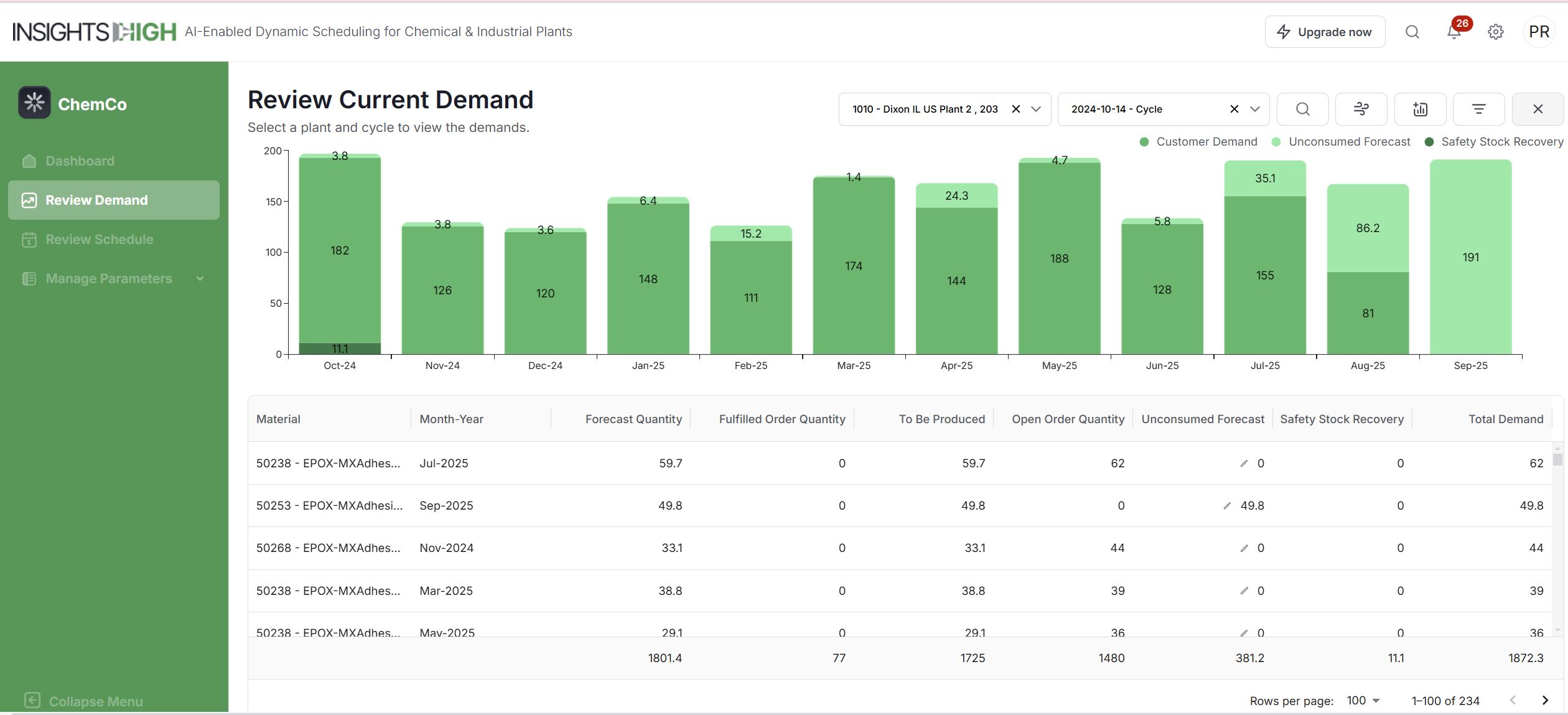
In chemical manufacturing, one of the most complex and impactful areas of decision-making lies in scheduling. Despite access to advanced technology and real-time data, many companies still rely on static tools and manual processes to decide production priorities, manage changeovers, and align with business goals. These outdated methods struggle to meet the demands of a dynamic industry, leaving value on the table.
 
While significant investments are made in IoT and Manufacturing 4.0 initiatives—often requiring millions in capital expenditure—we have seen that dynamic scheduling improvements can deliver 10-15% increases in asset utilization, 20-30% reductions in inventory carrying costs, and 15-20% improvements in on-time delivery, all at a fraction of the investment required for large-scale digital infrastructure upgrades. This makes scheduling optimization one of the highest-ROI opportunities in digital transformation.
 

The Subtle Challenges of Scheduling

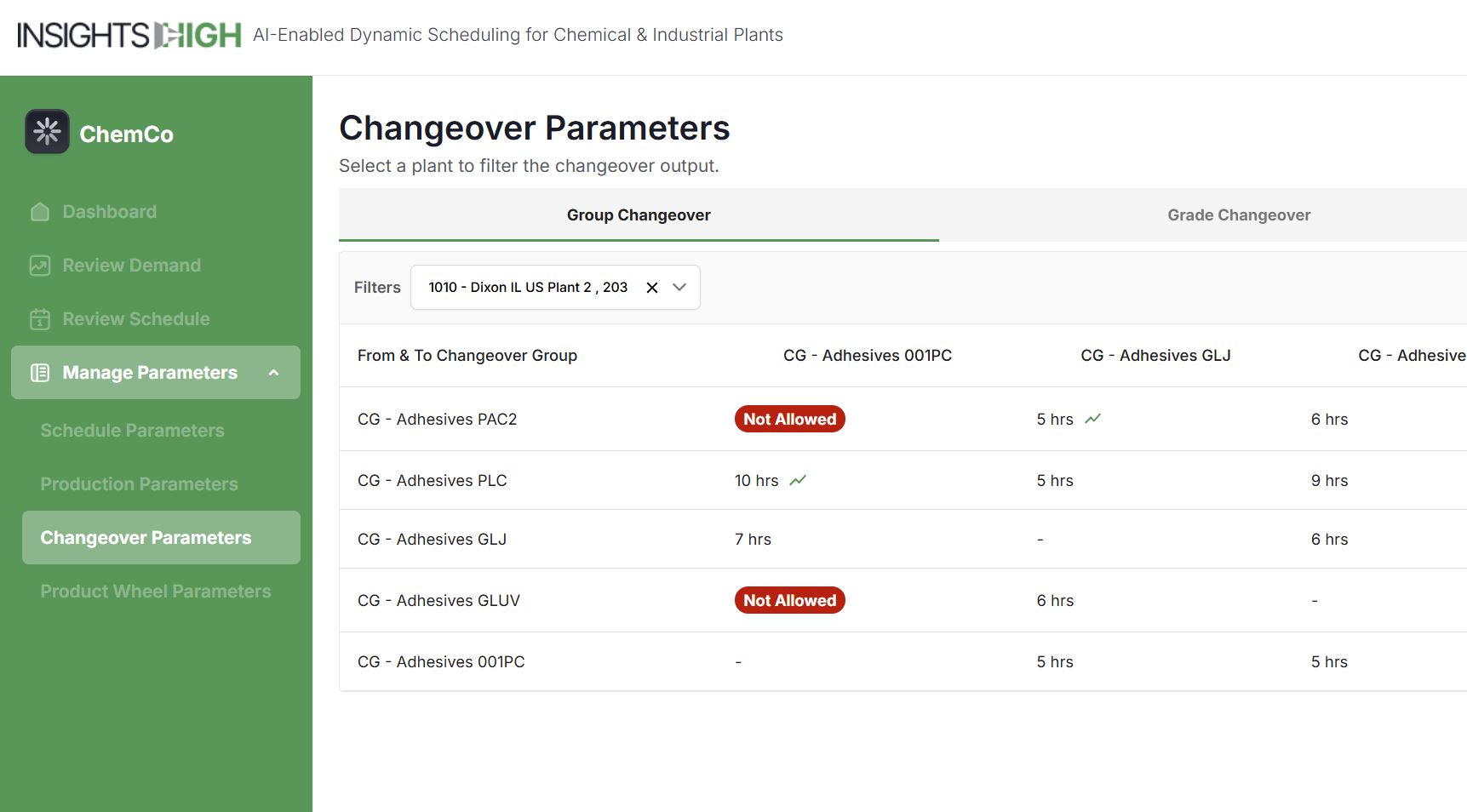
Scheduling in chemical plants is deceptively complex, requiring a careful balance of sequence-dependent changeovers, asset constraints, inventory policies, and market demand fluctuations. Yet, many companies rely on static product wheels or spreadsheets that lack the flexibility to adapt to shifting priorities.
 
For instance, consider a specialty chemicals company producing a broad portfolio of high-value additives. Their scheduling process relied on a well-structured product wheel, which worked effectively under stable demand conditions. However, during periods of demand volatility, the static nature of the product wheel forced unnecessary production runs, leading to surplus inventory for some SKUs while creating shortages for others. The result was increased holding costs and expedited shipments—hidden inefficiencies that added up over time.
 
Another example comes from a mid-sized polymer manufacturer that carefully sequences its production runs to minimize cleaning times. While their planners had deep expertise, they relied on manual adjustments to account for last-minute order changes. The process often resulted in overlooked inefficiencies, such as running a less urgent order earlier due to perceived simplicity, inadvertently delaying a higher-margin product. These misalignments were subtle but compounded over time, reducing profitability without raising obvious red flags.
 

Moving Beyond Visibility to Strategic Clarity

The next wave of digital transformation isn’t about adding more visibility—most companies already have dashboards providing real-time data streams. The real opportunity lies in strategic clarity: transforming raw data into actionable insights that address the most critical scheduling challenges:

  • Which production sequence maximizes overall profitability while minimizing disruptions?
  • How can we align production schedules with dynamic market demands without overproducing low-margin SKUs?
  • What trade-offs should we make between changeover time, inventory levels, and delivery performance to achieve the highest business impact?

Dynamic scheduling tools, powered by AI and advanced analytics, are designed to address these questions. Unlike static systems, they continuously adapt to shifting conditions—demand spikes, inventory constraints, or unexpected downtime—while balancing financial, operational, and customer priorities.

For example, a petrochemical company implemented a dynamic scheduling system that integrated demand forecasts, current inventory levels, and changeover efficiencies. The system identified opportunities to group certain low-priority SKUs, freeing capacity to meet time-sensitive orders. Over time, this approach reduced missed opportunities, improved responsiveness, and provided schedulers with clarity to prioritize high-margin products.

A Path to Dynamic Scheduling

Transitioning from traditional scheduling to dynamic systems requires a structured approach:
  1. Reassess static tools: A specialty polymer company refined its product wheels to incorporate greater flexibility for accommodating changes in demand, reducing excess production by 15%.
  2. Leverage analytics-driven scheduling: A coatings manufacturer adopted an AI-driven system that dynamically sequenced production runs, minimizing changeovers and increasing asset utilization by 12%.
  3. Align with business goals: A chemicals producer linked its scheduling decisions to broader financial objectives, ensuring that production aligned with profitability goals while maintaining service levels.
 

The Operational and Financial Upside

The benefits of dynamic scheduling extend beyond immediate cost reductions. By improving schedule flexibility, companies can increase throughput, reduce working capital, and enhance service reliability. Additionally, automating routine decisions allows planners to focus on strategic priorities, such as identifying potential bottlenecks or optimizing inventory policies.
For instance, a global producer of performance chemicals found that integrating advanced scheduling tools not only improved on-time delivery but also provided a clearer understanding of the financial impact of scheduling decisions. By focusing production on their most profitable SKUs, they improved EBITDA margins without significant capital investment.
 

Rethinking Digital Transformation

The chemical industry has made significant strides in digitalizing operations, but the next phase of transformation requires rethinking how decisions are made. Scheduling—a critical lever that directly impacts cost, service, and profitability—is ripe for innovation. By moving beyond static systems and digitalizing decision-making, companies can unlock new levels of agility, efficiency, and value creation.
Are you ready to take your scheduling to the next level? Let’s start the conversation.